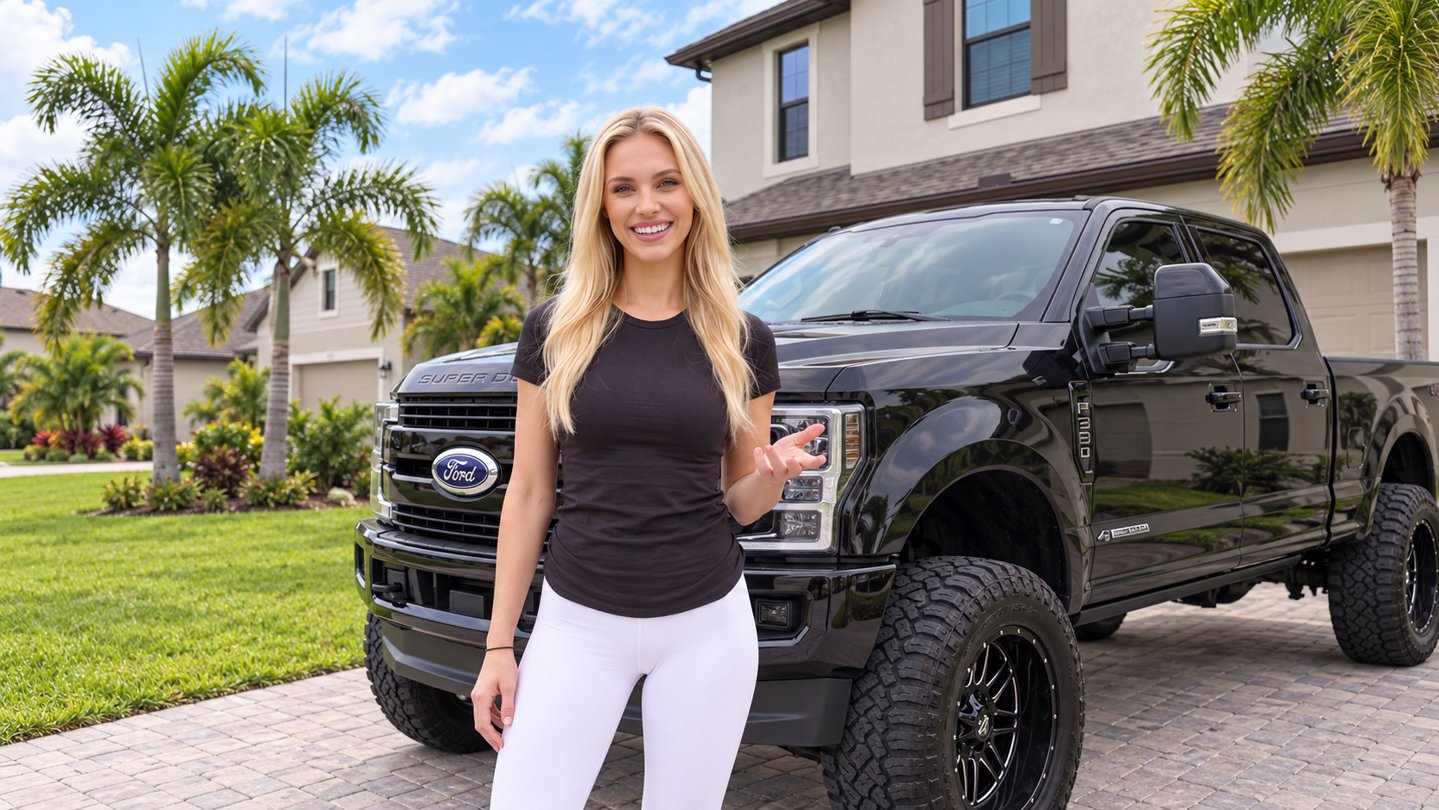
Florida law significantly limits what a Chapter 720 HOA can prohibit in an owner’s driveway. Personal vehicles, including pickup trucks, and qualifying work vehicles have statutory protection. That does not mean every trailer, recreational vehicle, oversized truck, or parking arrangement is automatically allowed.
Start by identifying the vehicle, where it is parked, and the precise restriction the association is enforcing.
Personal vehicles and pickups have express protection
Section 720.3075(3)(d) says HOA documents may not preclude an owner, tenant, guest, or invitee from parking a personal vehicle, including a pickup truck, in the owner’s driveway. It also addresses other areas where the person has a parking right under state, county, and municipal regulations.
The same provision protects driveway parking for a work vehicle that is not a commercial motor vehicle under the specific statutory definition, regardless of official insignia or visible designation.
Consequently, a company logo does not by itself resolve whether a work vehicle can be prohibited. Nor does an association’s decision to call every pickup a commercial vehicle settle the legal classification.
“Commercial motor vehicle” has a technical meaning
The parking provision points to section 320.01(25). That definition involves vehicle weight, axles, combinations, and specified exceptions. It is not simply any vehicle used to earn money, and it should not be replaced with a different definition from another statute or an insurance policy.
If a disputed truck is near a statutory threshold or used with a trailer, obtain the actual specifications and review the incorporated definition. Guessing from appearance is not a reliable substitute.
Assigned first-responder vehicles also have a separate protection under section 720.318 when the person otherwise has a right to park in the location.
The protection has boundaries
These provisions do not create a right to block a sidewalk, obstruct access, park on someone else’s property, or ignore applicable government parking rules. They also should not be presented as a blanket approval for every boat, RV, trailer, or derelict vehicle.
A driveway rule and a street-parking rule can raise different issues. Read the exact statutory language and determine whether a parking right exists in the particular location.
Older declarations can create disputes over the application of later substantive laws. Do not assume that an older recording date automatically exempts the HOA, or that one sentence about statutory priority resolves every contract issue. If applicability is contested, have counsel review the declaration, incorporation language, and specific provision.
Respond with documents, not labels
- Keep the violation notice and ask for the exact restriction.
- Photograph the vehicle and its position within the driveway.
- Identify whether it is a personal vehicle, work vehicle, or another category.
- Collect specifications if weight, axles, or a trailer combination is relevant.
- Ask the association to explain how its position fits the applicable statute.
The most productive question is whether this restriction can lawfully be applied to this vehicle in this location.
Florida law checked October 22, 2026. This is general education, not individual legal advice. Chapter 720 driveway protections should not automatically be applied to Chapter 718 condominiums.