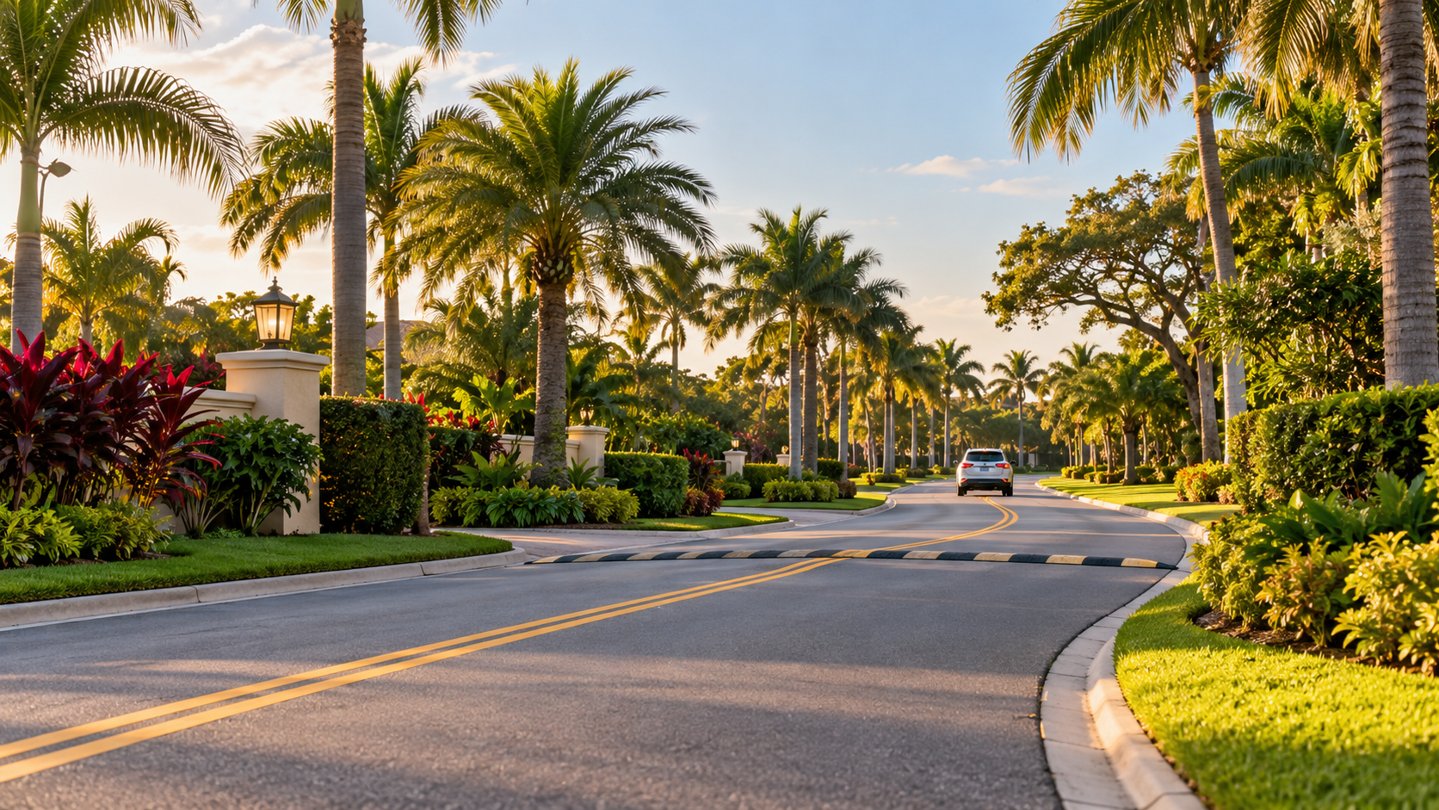
An HOA may be able to fine someone for violating a valid private-road speed rule. That does not make its notice the same thing as an official traffic ticket. A Florida homeowners’ association does not become a police agency simply because it owns or controls a road.
Before paying or disputing a “speeding ticket,” identify who issued it, the authority it claims, and whether it is an association charge or a government citation.
Association fines come from association authority
Section 720.305 allows Chapter 720 HOAs to levy reasonable fines for violations of the declaration, bylaws, or reasonable association rules. A properly authorized private-road speed rule may be enforceable through that framework.
The board still must establish a violation and follow the required notice and committee-hearing process. A security guard’s report or camera record may be evidence, but neither automatically eliminates the owner’s ability to question what happened.
An association fine is not, by itself, a state moving violation and does not itself put points on a driver’s license. Calling the charge a “citation” does not change its legal character.
Police can have authority on private roads
It is equally incorrect to assume that police can never enforce traffic laws inside a private community. Section 316.006 provides a route for municipal or county traffic jurisdiction over private roads through approved written agreements with those who own or control the roads.
The statute also allows a Chapter 720 board, by majority vote, to elect local-law-enforcement enforcement of state traffic laws on private roads it controls. The applicable agreement and statutory conditions still need attention; a board vote is not a reason to ignore the rest of the process.
Ask whether such an agreement exists and obtain the actual document. Public-road status and other sources of law-enforcement jurisdiction may also matter. A gated entrance alone answers none of those questions.
Review the evidence, not just the label
A useful dispute focuses on the alleged conduct: date, time, location, posted limit, measurement method, vehicle identification, and connection to the person being charged. Request the specific rule and the material the association relies on.
Do not automatically import every criminal traffic-evidence rule into private covenant enforcement. But do not assume an association’s unsupported assertion is conclusive either. The governing documents and facts determine what must be shown.
Florida’s HOA fine provisions also address curing violations. Whether a completed speeding incident is capable of cure is not resolved merely by promising to drive more slowly afterward. Avoid treating that promise as an automatic legal defense.
How to respond constructively
- Determine whether the sender is the association, its contractor, or a law-enforcement agency.
- Read the deadline and follow the correct dispute process for that type of notice.
- Ask for the governing provision and supporting evidence.
- Preserve relevant records and participate in any association hearing.
- Keep following safe driving practices while the charge is reviewed.
Florida law checked October 22, 2026. This is general educational information, not individual legal advice. Do not ignore an official government citation while pursuing a separate complaint with the HOA.