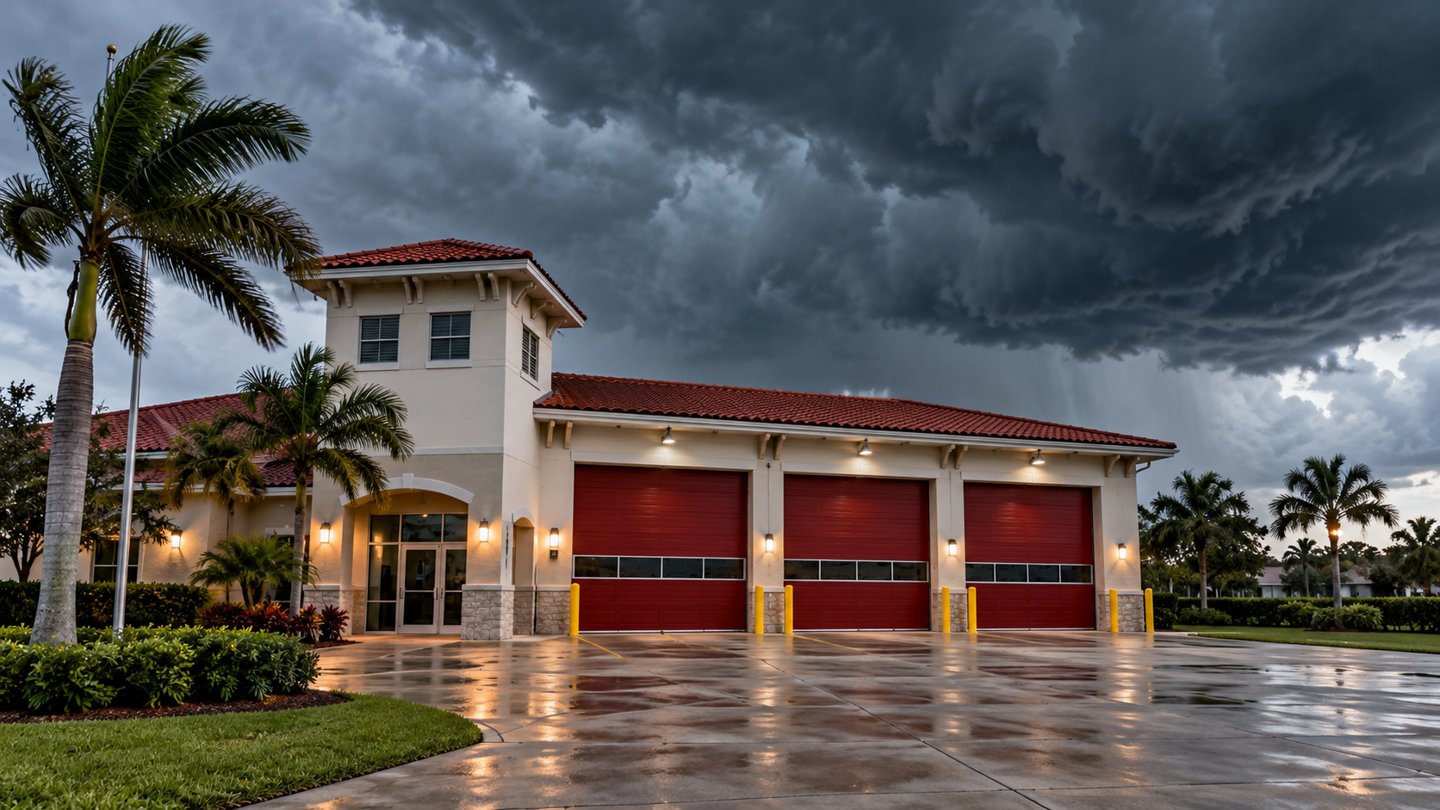
There is no single wind speed at which every Florida police officer, firefighter, or ambulance crew stops responding. Local agencies make operational decisions based on their policies and the conditions they face. The important point for homeowners is simpler: during a hurricane, calling for help does not guarantee that responders can reach you immediately.
That possibility should shape your preparations before the weather turns dangerous, especially if someone in your household depends on electricity, transportation assistance, or regular medical care.
Why response can be suspended
Emergency vehicles and their crews are vulnerable to strong winds, flying debris, floodwater, and blocked roads. A route that was passable an hour earlier may no longer be usable. Keeping crews sheltered during the worst conditions also preserves their ability to respond when travel becomes possible.
As one local example, Pinellas County Emergency Management warns that responders cannot respond when winds reach roughly 40–50 mph conditions. That is guidance for that county, not a statewide promise or a universal cutoff. Another agency may use different criteria, and flooding can interfere with access independently of wind speed.
Do not plan around the eye or the storm category
A hurricane’s forecast landfall time is not the deadline for getting ready. Dangerous conditions can arrive much earlier. NOAA explains that hurricane watches and warnings are timed ahead of anticipated tropical-storm-force winds because preparations become difficult once those winds arrive.
Likewise, the storm’s category is not a complete description of the danger at your address. Follow local evacuation instructions rather than assuming an inland location, newer house, or lower category means emergency access will remain available.
Build a plan that works without an immediate rescue
- Know your evacuation zone and where you will go if directed to leave.
- Arrange transportation and assistance before a storm is close. Find out in advance whether a local special-needs registration program fits your household.
- Keep essential medication, emergency lighting, water, food, and communication supplies accessible.
- Discuss power-dependent medical equipment with the equipment provider or care team before hurricane season. A generator is not a complete plan unless it can be operated safely.
- Sign up for official local alerts and keep a battery-powered way to receive updates.
The National Weather Service advises leaving immediately when local officials order evacuation. Waiting until the street floods can remove choices that were available earlier.
What if an emergency happens anyway?
Call 911 for a genuine fire, police, or medical emergency. Tell the dispatcher your exact location and the situation, and follow their instructions. A temporary limit on vehicle response does not necessarily mean the emergency call center has stopped answering.
Do not go outside to look for responders or try to cross floodwater because help is delayed. Your best opportunity to reduce that risk comes before the storm: leave when directed, move essential preparations earlier, and make sure everyone in the household understands the plan.