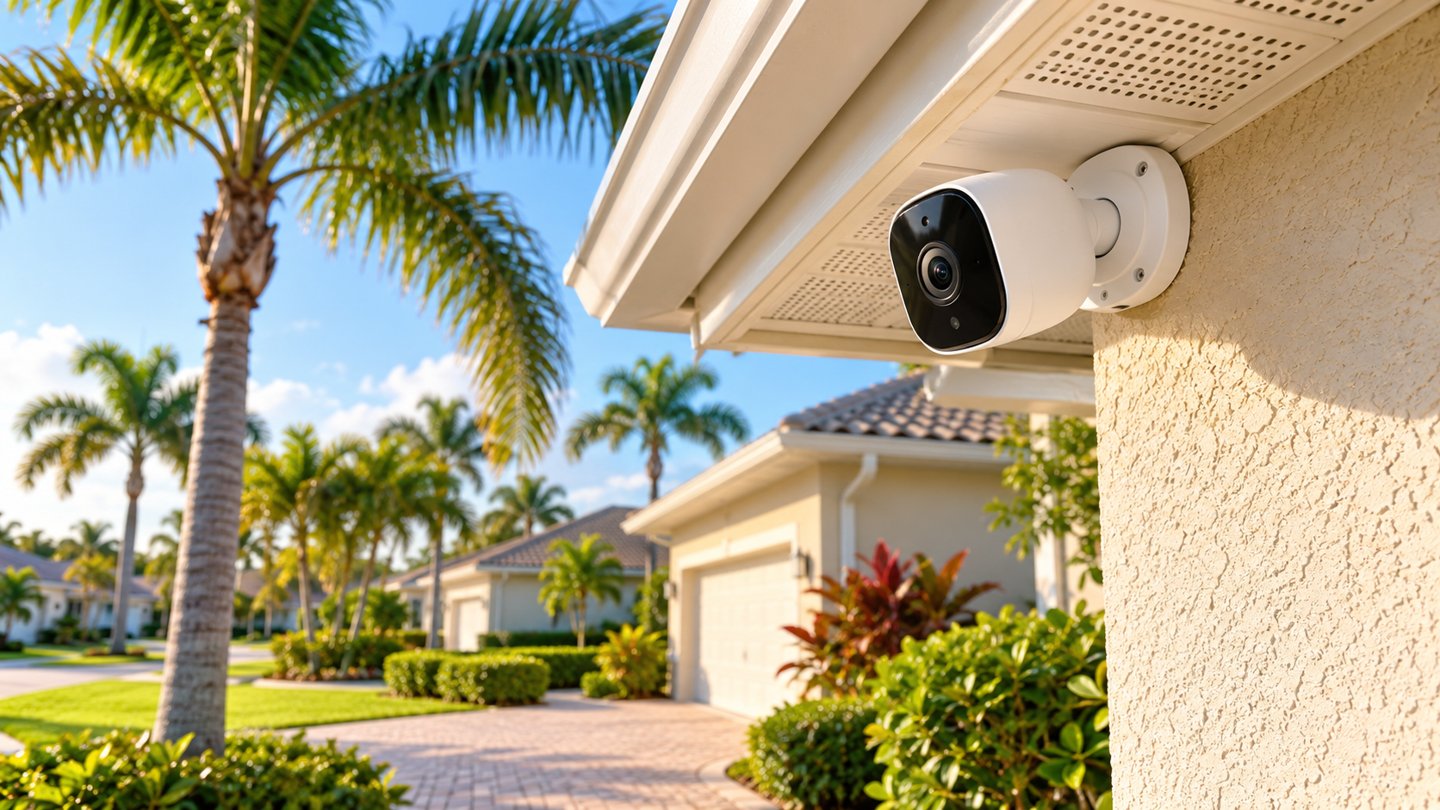
Yes, sometimes. A visible exterior security-camera installation can fall within an HOA’s properly authorized architectural-review process. But an association cannot reject equipment merely because a board member dislikes cameras, and an owner should not assume that calling something a security device automatically exempts it from every restriction.
For a Florida Chapter 720 HOA, begin with the governing documents, the proposed installation, and the statutory limits on architectural control.
Find the source of the approval requirement
Section 720.3035 limits architectural authority to what is specifically stated or reasonably inferred in the declaration or published standards authorized by it. The association must apply authorized architectural standards reasonably and equitably.
A declaration addressing exterior attachments, alterations, wiring, or improvements may be relevant even if it never uses the word “camera.” On the other hand, an informal preference cannot automatically become a binding restriction.
If the association denies an improvement application, section 720.3035(4)(a) requires a written notice identifying the specific rule or covenant and the particular part of the proposal that does not conform. “The board does not approve cameras” may leave important questions unanswered.
Visibility can change the analysis
Under section 720.3045, an HOA generally cannot restrict installation, display, or storage of items that are not visible from the parcel’s frontage, an adjacent parcel, an adjacent common area, or a community golf course, unless general law or local ordinance prohibits them.
That is broader than a street-only visibility test. A camera hidden from passing cars might still be visible from a neighbor’s parcel. Photograph the proposed location from relevant viewpoints rather than assuming that mounting it behind the house resolves the issue.
This protection also is not permission to install equipment on property you do not own or to ignore an applicable easement. Condominium exterior walls and limited common elements require their own document and Chapter 718 analysis.
Approval to install is not permission to record anything
Audio recording raises separate privacy questions. Florida’s definition of protected oral communication involves a justified expectation against interception. The general consent exception in section 934.03(2)(d) requires all parties’ prior consent.
Do not assume every outdoor conversation is unprotected or that a visible camera automatically provides every necessary consent. Lens direction, neighboring private spaces, audio settings, and the circumstances matter independently of architectural approval.
Make the application easy to evaluate
- Show the mounting location, dimensions, color, and visible wiring.
- Identify whether the equipment attaches to your property or a shared surface.
- Explain any lights, alerts, or audio features and how they will operate.
- Ask for the applicable written standards and retain the response.
A narrow, documented installation request is more useful than a general argument about whether cameras are good for the neighborhood. Preserve the approval before paying for permanent installation.
Florida law checked October 22, 2026. This is educational information, not individual legal advice. Obtain advice about disputed restrictions or recordings that may capture private conversations or spaces.