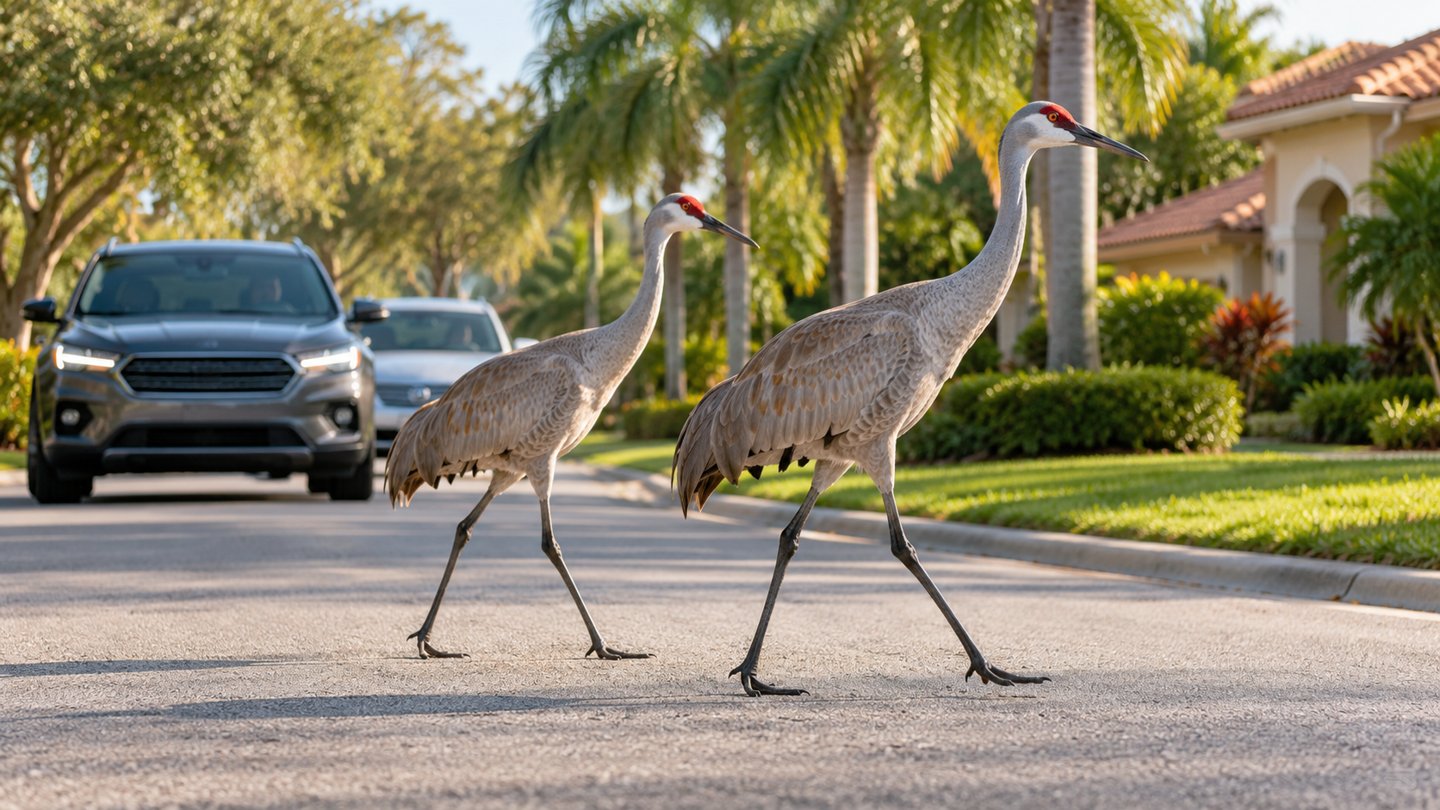
There is no simple rule that every honk at a sandhill crane is illegal. Florida requires drivers to use a horn when reasonably necessary for safe operation, while wildlife protections limit harmful harassment. The sensible response to cranes crossing a neighborhood road is to slow safely, give them space, and avoid turning a short delay into a dangerous encounter.
That distinction matters around Sarasota and Manatee, where a familiar pair of long-legged neighbors can suddenly become the slowest traffic on the street.
What Florida’s horn law actually says
Florida Statute 316.271 requires an audible warning when reasonably necessary to ensure safe operation. It also prohibits a horn or warning device from emitting an unreasonably loud or harsh sound or a whistle.
The current statute does not create a crane-specific honking ban. A warning intended to prevent a collision is not the same situation as repeatedly sounding a horn out of impatience. Whether particular conduct violates a law depends on what happened, not simply whether someone touched the horn.
Wildlife guidance is more nuanced than a blanket ban
The Florida Fish and Wildlife Conservation Commission identifies the Florida sandhill crane as a state-designated Threatened species protected by state law and the Migratory Bird Treaty Act. Protection does not mean every interaction is automatically an offense, but it does mean drivers should not treat the birds as obstacles they can push aside.
FWC’s guidance for crane conflicts on golf courses and lawns includes vehicle horns among approved hazing methods for adult cranes directly approaching people or pets outside breeding season. The same guidance prohibits hazing during breeding season, within 400 feet of a nest, and within 400 feet of adults with flightless young. Local sound restrictions can also apply.
That is not blanket permission to chase a family off a public road. A driver usually cannot tell from behind the wheel whether a nest is nearby or young birds are able to fly. When the goal is simply getting home, patience is a better starting point than attempting wildlife management.
A safer approach to a crane crossing
- Slow with traffic in mind. Notice the birds early when possible, and avoid abrupt or unpredictable maneuvers.
- Leave a generous gap. Do not creep into the birds, make physical contact, or try to separate a group.
- Keep the crossing clear. Do not get out in traffic to herd them or swerve around them into another hazard.
- Use a warning for safety, not persuasion. A potentially dangerous situation deserves a different response from an inconvenient wait.
- Do not lure them with food. FWC’s living-with-cranes guidance explains that intentional feeding is prohibited and can increase risks to the birds.
Do not judge an entire encounter from a short clip
A few seconds of neighborhood video may not show approaching traffic, nearby young, or what happened beforehand. It is better to describe what is visible than declare that a driver committed a crime.
For a recurring wildlife conflict, seek FWC’s situation-specific guidance. For an immediate traffic emergency, prioritize human safety. Most ordinary crane crossings need neither confrontation nor a legal debate: they need a little room and a little time.